In the global industrial packaging market, two polymers stand above the rest: Polypropylene (PP) and Polyethylene (PE). While they share a common origin as thermoplastic polyolefins, their internal molecular structures dictate vastly different performances in the field. Choosing the wrong material can lead to product spoilage, bag failure during transport, or unnecessary cost overruns. This guide provides a deep technical dive into these two titans of packaging, helping you decide which is best for your specific application.
1. Molecular Architecture: The Chemistry of Strength
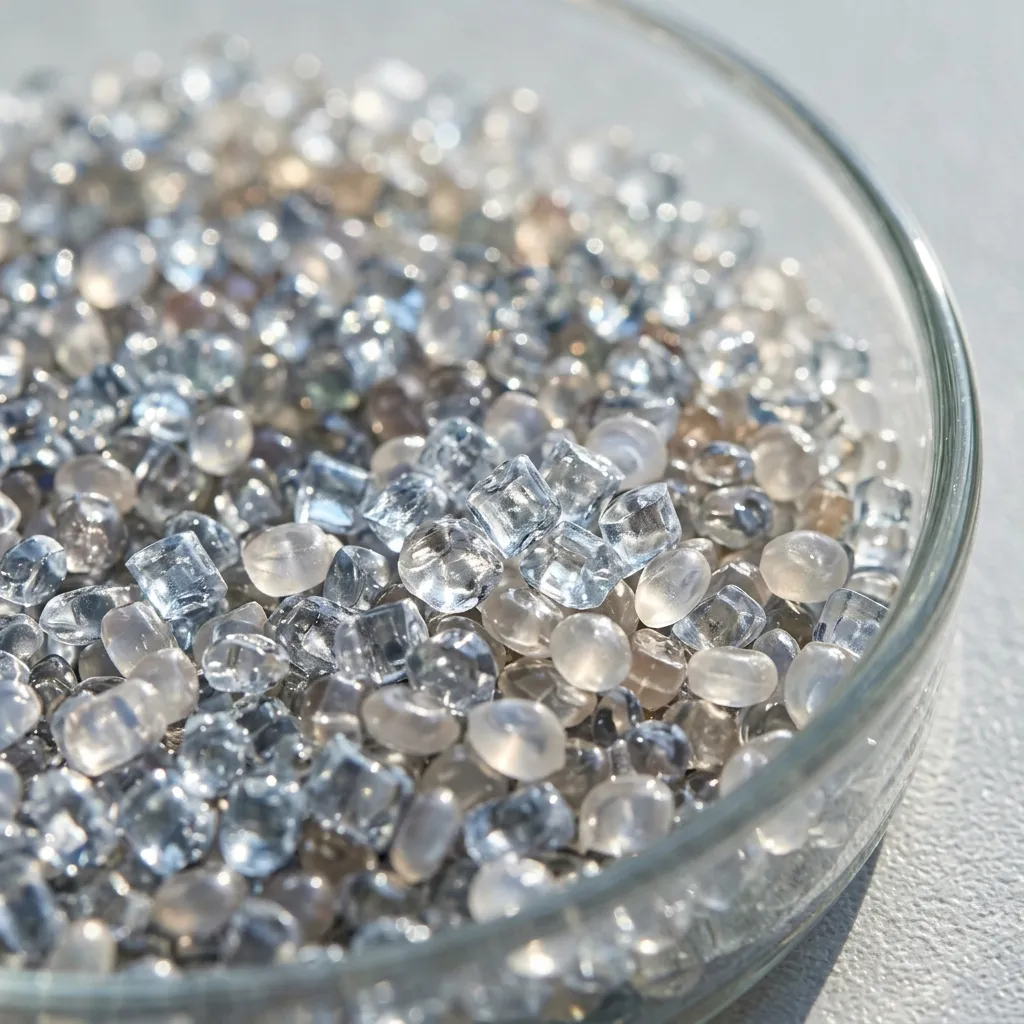
At the molecular level, the difference between PP and PE lies in their monomers. Polyethylene (chemical formula: (C₂H₄)ₙ) is the simplest polymer, consisting of a chain of ethylene units. This simplicity allows for high flexibility and a range of densities (LDPE, LLDPE, and HDPE).
Polypropylene (chemical formula: (C₃H₆)ₙ), however, features a pendant methyl group (—CH₃) on every second carbon atom in the chain. This additional group restricts the rotation of the polymer chain, making PP inherently more rigid and giving it a much higher melting point than PE. In the world of woven sacks, this rigidity is what provides the high tensile strength required to hold 50kg+ of material without stretching or snapping.
"The methyl group in PP is the secret to its 'living hinge' property and its superior stiffness. While PE is the king of flexibility and moisture resistance, PP is the undisputed champion of structural integrity for bulk dry cargo."
PP vs. PE Bags: The Ultimate Material Comparison for Industrial Packaging
2. Physical Properties: A Technical Head-to-Head
When evaluating packaging for export, technical metrics are the only objective way to ensure quality. Here is how the two materials compare across critical performance indicators:
| Property | Polypropylene (PP) | Polyethylene (PE/HDPE) |
|---|---|---|
| Melting Point | 160°C – 170°C | 115°C – 135°C |
| Tensile Strength | Very High (High Tenacity) | Medium (Flexible) |
| Density | 0.895 – 0.92 g/cm³ | 0.941 – 0.965 g/cm³ |
| Moisture Barrier | Good (Excellent if Laminated) | Excellent Natural Barrier |
| Low-Temp Impact | Brittle below 0°C | Remains Flexible at -50°C |
| Surface Clarity | High Transparency | Translucent / Milky |
3. Moisture Barrier & Chemical Resistance
One of the most critical factors in international export is hygroscopy — the tendency of products to absorb moisture from the air.
The PE Advantage
PE is naturally more hydrophobic than PP. This is why Polyethylene is the material of choice for inner liners. If you are shipping sugar, salt, or fine chemicals that must stay perfectly dry, a PP woven bag alone isn't enough; you need a PE liner to act as a hermetic moisture seal.
The PP Advantage
PP offers superior resistance to organic solvents and fats. In agricultural contexts where seeds might have oil residues or fertilizers have specific chemical compositions, PP maintains its structural integrity better than many grades of PE.
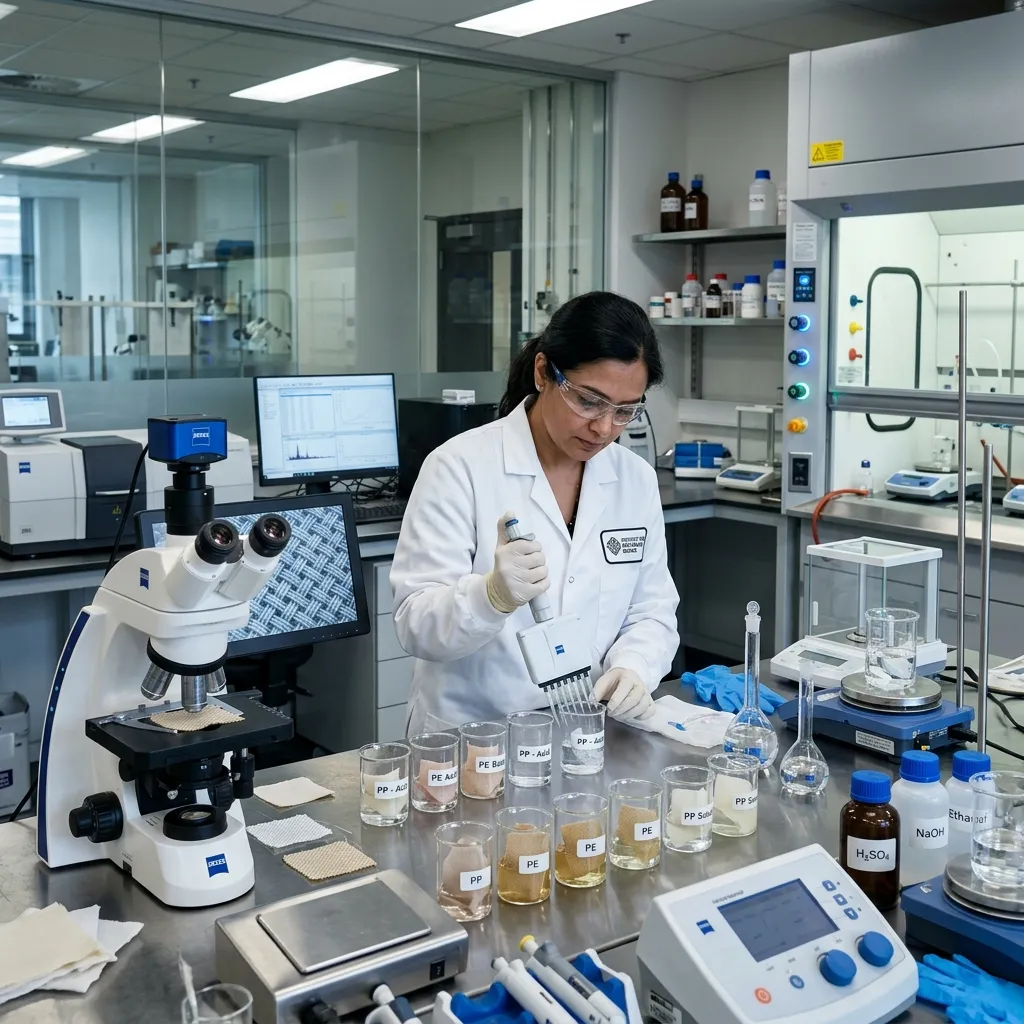
PP vs. PE Bags: The Ultimate Material Comparison for Industrial Packaging
4. Manufacturing: Woven vs. Film Technology
The way these materials are processed into bags defines their final utility:
Woven Technology (Usually PP)
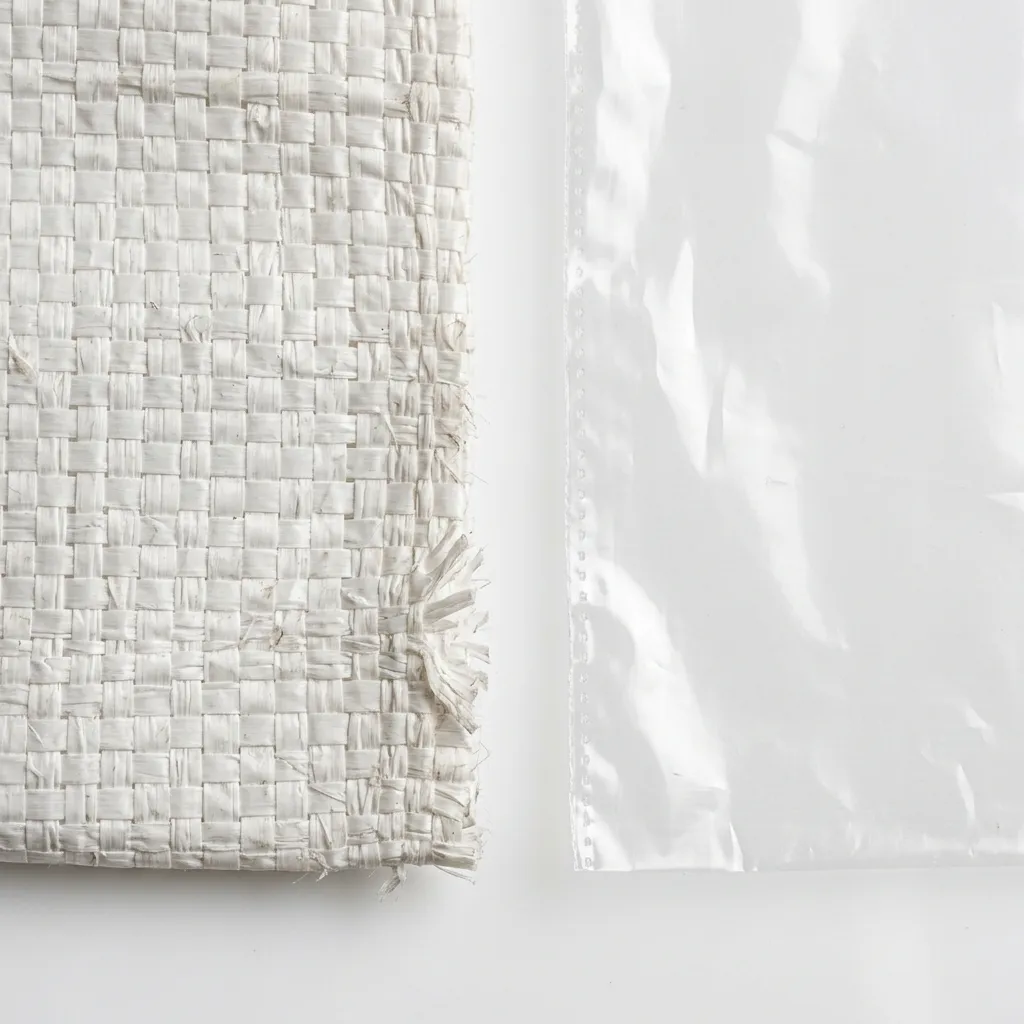
PP is extruded into thin tapes, stretched, and then woven on circular looms. This create a fabric with high breathability (unless laminated) and immense weight-bearing capacity. Woven bags are the standard for 25kg, 50kg, and 1000kg (FIBC) packaging.
Film Technology (Usually PE)
PE is usually processed through "blown film" extrusion, creating a continuous, non-porous plastic sheet. While these bags are 100% waterproof, they lack the tensile strength of woven fabrics and are more prone to puncturing under heavy industrial loads.
5. Industrial Applications: Where to Use Which?
Use PP Woven When:
- • Packaging wheat, rice, corn, or grains (breathability required)
- • Transporting cement, sand, or construction aggregates
- • Heavy pallet stacking is required (high friction/low creep)
- • Long-term storage in warm warehouses (high heat stability)
Use PE Bags/Liners When:
- • Contents are highly hygroscopic (sugar, salt, powders)
- • Shipping fine powders that would sift through woven mesh
- • Handling products in sub-zero/arctic temperatures
- • Absolute air-tightness is a requirement for shelf life
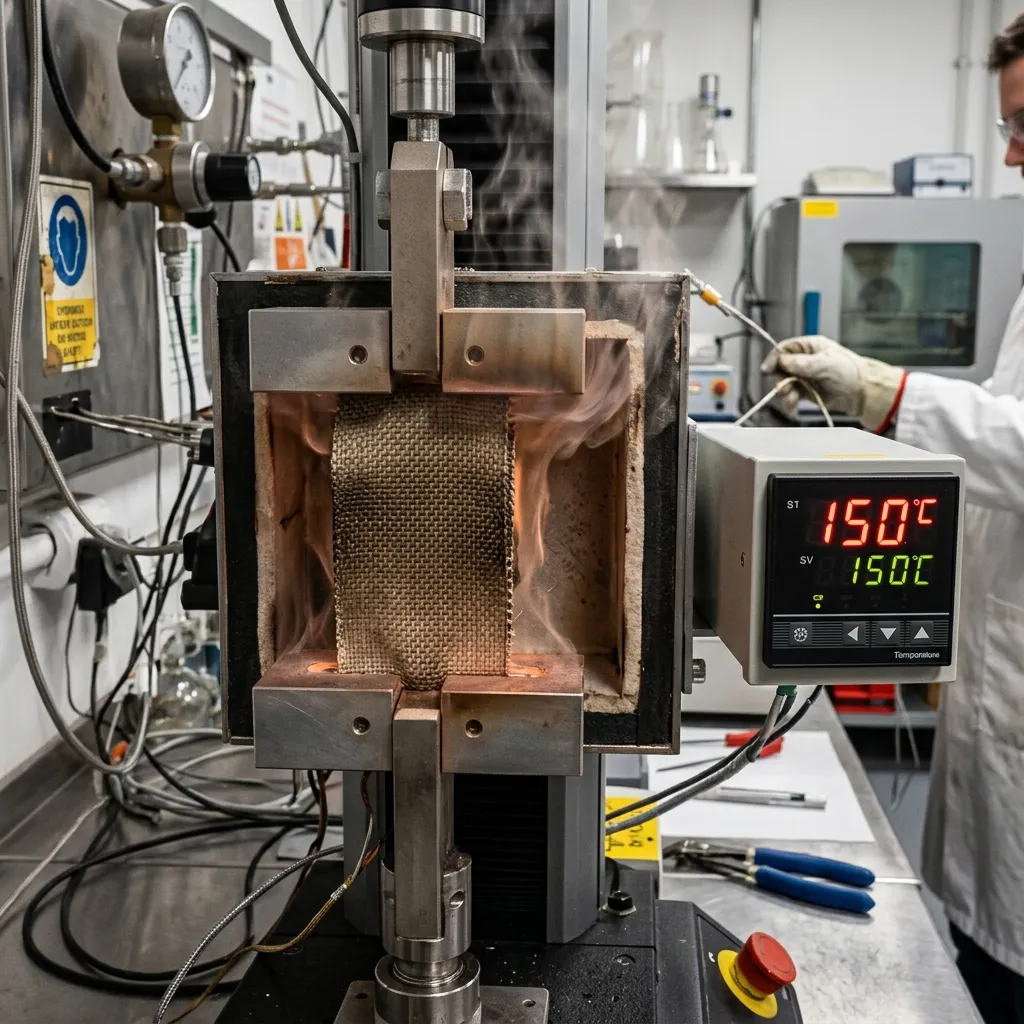
PP vs. PE Bags: The Ultimate Material Comparison for Industrial Packaging
6. Sustainability & The Circular Economy
Both PP and PE are 100% recyclable. Polypropylene (#5) is often recycled into heavy-duty industrial items like battery cases, signal lights, and brooms. Polyethylene (#2 and #4) is typically recycled back into film products like garbage bags, plastic lumber, and bottles.
From a carbon footprint perspective, the extreme durability of PP woven bags makes them highly reusable. In many agricultural regions, a single PP sack may be reused 5-10 times for local transport before being sent to a recycling facility, significantly lowering its lifecycle environmental impact.
7. Cost-Benefit Analysis for International Export
For high-volume export orders to markets like Iraq, Russia, and Central Asia, PP woven bags generally offer a better Return on Investment (ROI). Their high tensile-strength-to-weight ratio means you can use a thinner, lighter bag (lower shipping cost) to protect the same amount of cargo compared to a heavy-gauge PE film bag.
However, the "Hybrid Solution" — a PP woven bag with a PE liner — remains the gold standard for high-value agricultural export. It combines the mechanical strength of Polypropylene with the chemical/moisture protection of Polyethylene, ensuring your product arrives in "factory-fresh" condition regardless of the transit distance.
8. FAQ & Frequently Asked Questions
Can PP bags be used in freezing temperatures?
▼
Which material has better UV resistance?
▼
Why is Iranian PP considered "Premium"?
▼
9. Conclusion: Making the Strategic Choice
The choice between PP and PE is not about which material is "better," but which is right for your cargo and logistics chain. If your priority is structural strength, stackability, and breathability for dry goods, Polypropylene Woven Bags are the logical choice. If your priority is moisture exclusion, liquid containment, or extreme cold-weather flexibility, Polyethylene is your best ally.
At SherkatTrade, we specialize in engineering the perfect hybrid solution for your export needs. Whether it's high-GSM PP sacks for the construction industry or food-safe PE-lined bags for global agricultural trade, our technical team is ready to assist you in making the right choice for your bottom line.