The Complete Guide to PP Woven Bags: Specifications, Uses, and Export Standards
Explore the world of polypropylene woven bags. Learn about GSM, denier, UV resistance, and why Iranian PP bags are the top choice for global agricultural and industrial export.
Author: SherkatTrade
Polypropylene (PP) woven bags have revolutionized the packaging industry, providing a durable, lightweight, and cost-effective solution for a wide range of products. From agricultural grains like wheat and rice to heavy construction materials like cement and sand, these bags are the backbone of global commerce. In this comprehensive guide, we will take you through every aspect of PP woven bags — from the raw polymer science to international export compliance — so you can make the most informed purchasing decision.
Whether you are a procurement manager for a flour mill in Iraq, a fertilizer distributor in Russia, or a construction supplier in Central Asia, this article covers everything you need to know about PP woven sacks, BOPP laminated bags, valve cement bags, and more. We have structured this guide to be the single most complete resource available online for polypropylene packaging.
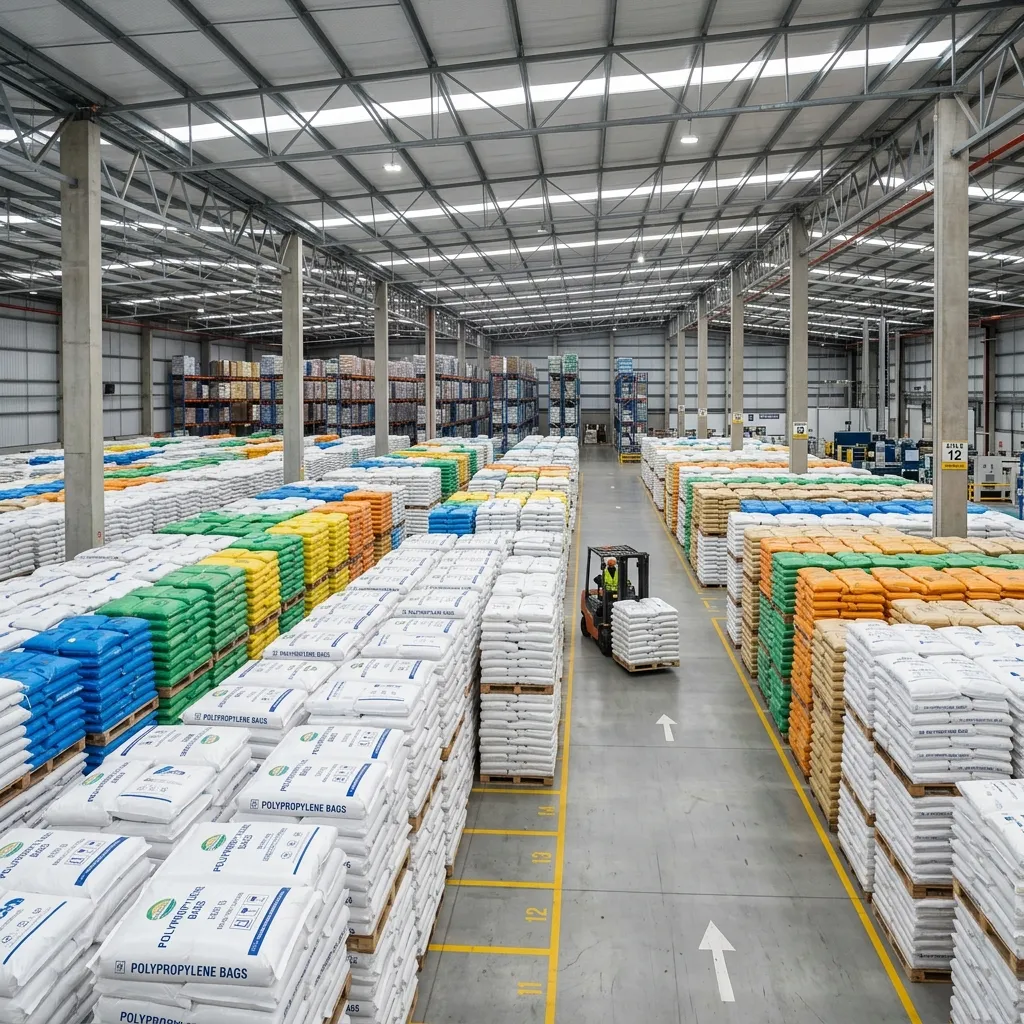
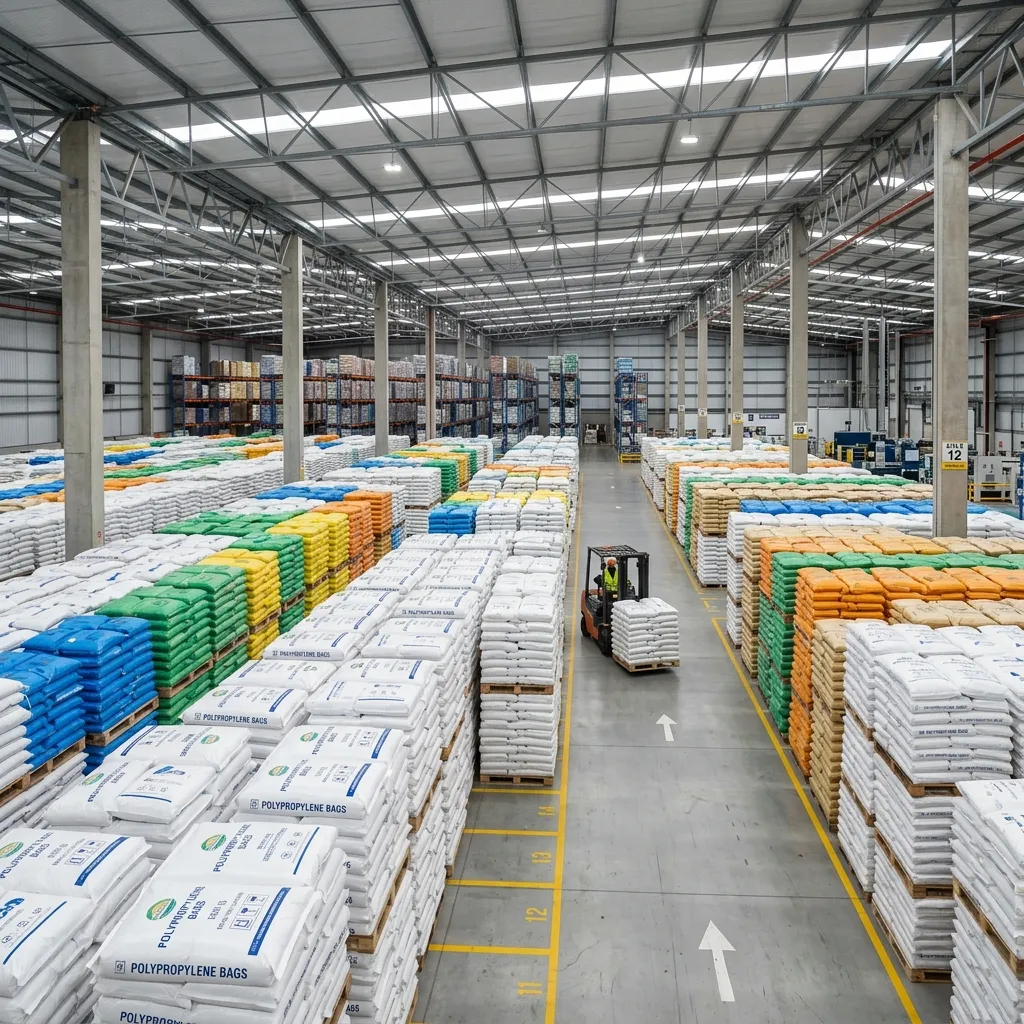
High-quality Iranian polypropylene woven bags ready for international export.
What Exactly Are PP Woven Bags?
PP woven bags are made from a high-grade synthetic polymer called polypropylene (chemical formula: (C₃H₆)ₙ). This thermoplastic polymer belongs to the polyolefin family and is produced through the catalytic polymerization of propylene monomer, a byproduct of petroleum refining. Polypropylene is the second most widely produced commodity plastic in the world, and its applications in woven packaging represent one of its highest-value industrial uses.
The manufacturing process begins with PP granules being fed into an extruder, where they are melted at temperatures between 200°C and 260°C. The molten polymer is then forced through a flat die to create a thin film, which is immediately slit into narrow tapes (typically 2.5mm to 3.5mm wide). These tapes are stretched to orient the polymer chains, increasing their tensile strength by up to 7 times their original value.
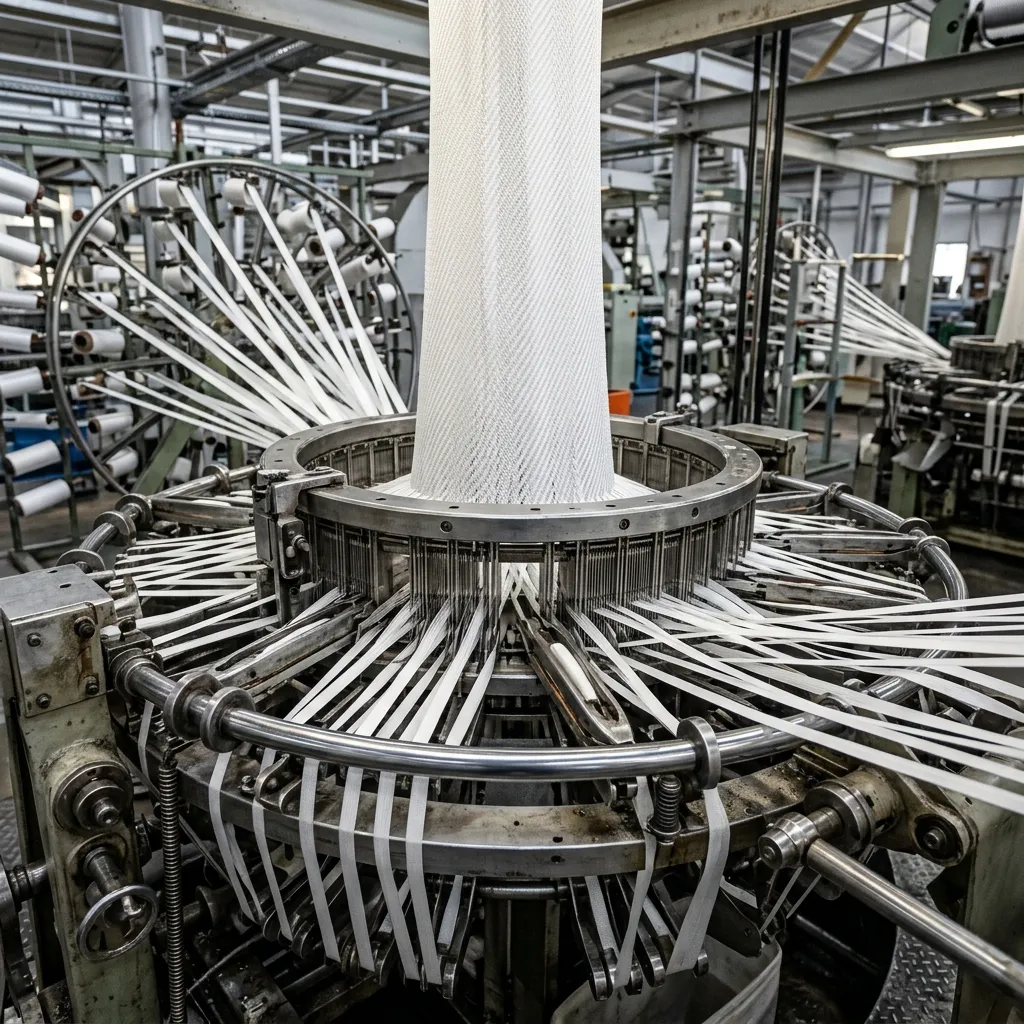
The oriented tapes are wound onto bobbins and loaded onto circular looms — specialized weaving machines that interlace warp (vertical) and weft (horizontal) tapes in an over-under pattern. The resulting tubular fabric is then cut, sewn, and finished into bags of various sizes and configurations. The cross-weaving pattern is what gives PP bags their remarkable combination of strength and flexibility.
"The secret to the strength of a PP bag lies in the cross-weaving pattern of the tapes, which distributes weight evenly and prevents tearing even under extreme pressure. A well-made 50kg PP sack can endure over 15 drops from a height of 1.2 meters without failure."
PP Woven Bags vs. Other Packaging Materials
Understanding how polypropylene woven bags compare to alternative packaging options is essential for making the right choice. Here is a detailed comparison:
Feature
PP Woven Bags
Jute / Burlap
Paper Sacks
PE Film Bags
Tensile Strength
★★★★★
★★★☆☆
★★☆☆☆
★★☆☆☆
Moisture Resistance
★★★★★
★☆☆☆☆
★☆☆☆☆
★★★★★
Cost Effectiveness
★★★★★
★★☆☆☆
★★★☆☆
★★★★☆
Printability
★★★★★
★★☆☆☆
★★★★☆
★★★☆☆
Reusability
★★★★☆
★★★☆☆
★☆☆☆☆
★☆☆☆☆
UV Resistance (with additives)
★★★★★
★★★☆☆
★☆☆☆☆
★★★☆☆
Recyclability
★★★★★
★★★★★
★★★★☆
★★★☆☆
Types of PP Woven Bags
Not all PP bags are created equal. There are several distinct categories, each designed for specific applications:
1
Standard PP Woven Bags
The most common type used for grains, fertilizers, and animal feed. Available with open mouth or hemmed top. Typically offered in white or transparent finish with basic flexographic printing up to 4 colors.
2
BOPP Laminated Bags
Bags with a Biaxially Oriented Polypropylene (BOPP) film laminated on the outer surface. Enables high-resolution rotogravure printing (up to 10 colors), giving a glossy, premium brand appearance.
3
Valve Cement Bags
Engineered specifically for dry powders like cement, gypsum, and plaster. They feature a self-sealing valve that allows automatic filling on high-speed packing lines. Usually made with higher GSM (90-120g).
4
FIBC / Jumbo Bags
Flexible Intermediate Bulk Containers (FIBCs) designed to carry 500kg to 2000kg. They come with lifting loops for forklift handling. Essential for large-scale industrial and mineral exports.
5
PP Bags with PE Liner
Includes an inner polyethylene liner that creates a complete moisture and air barrier. Essential for hygroscopic materials like sugar, salt, and certain chemicals.
6
Colored / Striped Bags
Available with full-color or striped tape patterns woven directly into the fabric. Used for easy product identification and as an anti-counterfeiting measure.
Technical Specifications: Understanding the Metrics
When ordering PP bags for export, understanding the technical specifications is crucial for quality assurance and cost optimization. Every parameter directly affects the bag's performance, shelf life, and suitability for specific cargo types. Here are the key metrics every buyer must understand:
Metric
Description
Standard Range
Recommended For
GSM
Grams per Square Meter — determines the overall fabric weight and thickness.
45g – 120g
All applications
Denier
Linear mass density of individual fiber tapes (weight in grams per 9000m).
600D – 1200D
Strength classification
Mesh Count
Number of tapes per inch in both warp and weft directions.
8×8 – 14×14
Fabric tightness
UV Protection
Chemical additives (HALS/Benzotriazole) to prevent sunlight degradation.
200 – 1600 hrs
Outdoor storage
Tensile Strength
Resistance to breakage under tension, measured in Newtons per 5cm strip.
40N – 120N
Heavy-duty loads
Elongation at Break
How much the tape stretches before snapping, expressed as a percentage.
15% – 30%
Drop resistance
The GSM and Denier Relationship: A Deep Dive
A common mistake in the packaging industry is confusing GSM with Denier. While GSM measures the density of the final woven fabric, Denier measures the thickness of individual threads before weaving. These are two distinct measurements that work together to determine the bag's ultimate performance.
For example, you can achieve a 70 GSM fabric using either thick tapes (high denier) woven loosely (low mesh count), or thin tapes (low denier) woven tightly (high mesh count). The resulting bags will have the same weight per square meter but vastly different physical properties — the tightly woven version will have better sift-proofing, while the loosely woven version might have better breathability for agricultural products.
📊 Smart Reference: GSM Selection Guide
45-60g
Grams / Sq Meter
Light Duty
Vegetables, lightweight grains, packaging under 25kg
Polypropylene naturally degrades when exposed to ultraviolet radiation. Without UV stabilizers, a PP bag left outdoors in direct sunlight in the Middle East (where UV index regularly exceeds 10+) can lose up to 50% of its tensile strength within just 3-4 weeks. This is catastrophic for products stored outdoors or transported in open trucks — a common scenario in Iraq, Afghanistan, and Central Asia.
UV stabilization is achieved by adding chemical compounds during the extrusion phase. The two most common stabilizer types are:
1HALS (Hindered Amine Light Stabilizers): These work by scavenging free radicals generated by UV exposure. They are the gold standard for long-term outdoor protection and can provide up to 1600 hours of UV resistance. Recommended for agricultural sacks stored in open fields.
2Benzotriazole UV Absorbers: These absorb UV radiation and convert it to harmless heat. They are often used in combination with HALS for maximum protection. More cost-effective for indoor/short-term outdoor applications.
The Manufacturing Process: From Granule to Finished Bag
Understanding the production workflow helps buyers appreciate the quality control checkpoints and identify potential cost optimization areas:
Precision circular looms weaving high-tenacity polypropylene tapes into industrial fabric.
01
Extrusion & Tape Line
PP granules (usually homopolymer, MFI 3-4) are mixed with masterbatch (color, UV stabilizer, calcium carbonate filler) and extruded through a flat die at 220-250°C. The resulting film is slit into tapes and stretched at a 1:6 to 1:8 draw ratio to achieve the desired denier and tenacity.
02
Winding
Oriented tapes are wound onto precision bobbins using automatic winders. Tension control is critical at this stage — uneven tension leads to weaving defects, broken tapes, and inconsistent fabric quality. Modern winders can handle up to 200 bobbins simultaneously.
03
Circular Loom Weaving
Bobbins are loaded onto circular looms (4-shuttle or 6-shuttle) that weave the tapes into tubular fabric. The loom speed, shuttle count, and tape arrangement determine the mesh density and fabric width. Leading Iranian factories use Starlinger (Austria) and Lohia (India) looms for consistent international-grade output.
04
Lamination & Coating (Optional)
For bags requiring moisture barrier or premium print, the fabric is laminated with PE coating (15-40 microns) or BOPP film. PE lamination is done via extrusion coating, while BOPP lamination uses adhesive bonding. This step adds 10-20% to the bag cost but dramatically improves performance.
05
Printing
Bags can be printed using flexographic (up to 4 colors, for standard bags) or rotogravure (up to 10 colors, for BOPP laminated bags) methods. Modern CI (Central Impression) flexo presses deliver excellent registration accuracy. All inks used are food-safe and comply with international packaging regulations.
06
Cutting, Sewing & Finishing
The tubular fabric is cut to length, folded at the bottom, and sewn with high-tenacity polyester thread using industrial overlock machines. Top closure options include open mouth (for manual filling), valve (for automated cement lines), and gusseted bottoms for stable stacking. Quality inspection happens at this final stage.
Primary Industrial and Agricultural Uses
Polypropylene woven bags are among the most versatile packaging solutions available today. Their combination of strength, lightness, and customizability makes them indispensable across dozens of industries. Here is an in-depth look at how they are used across different sectors worldwide:
🌾 Agriculture & Food Grains
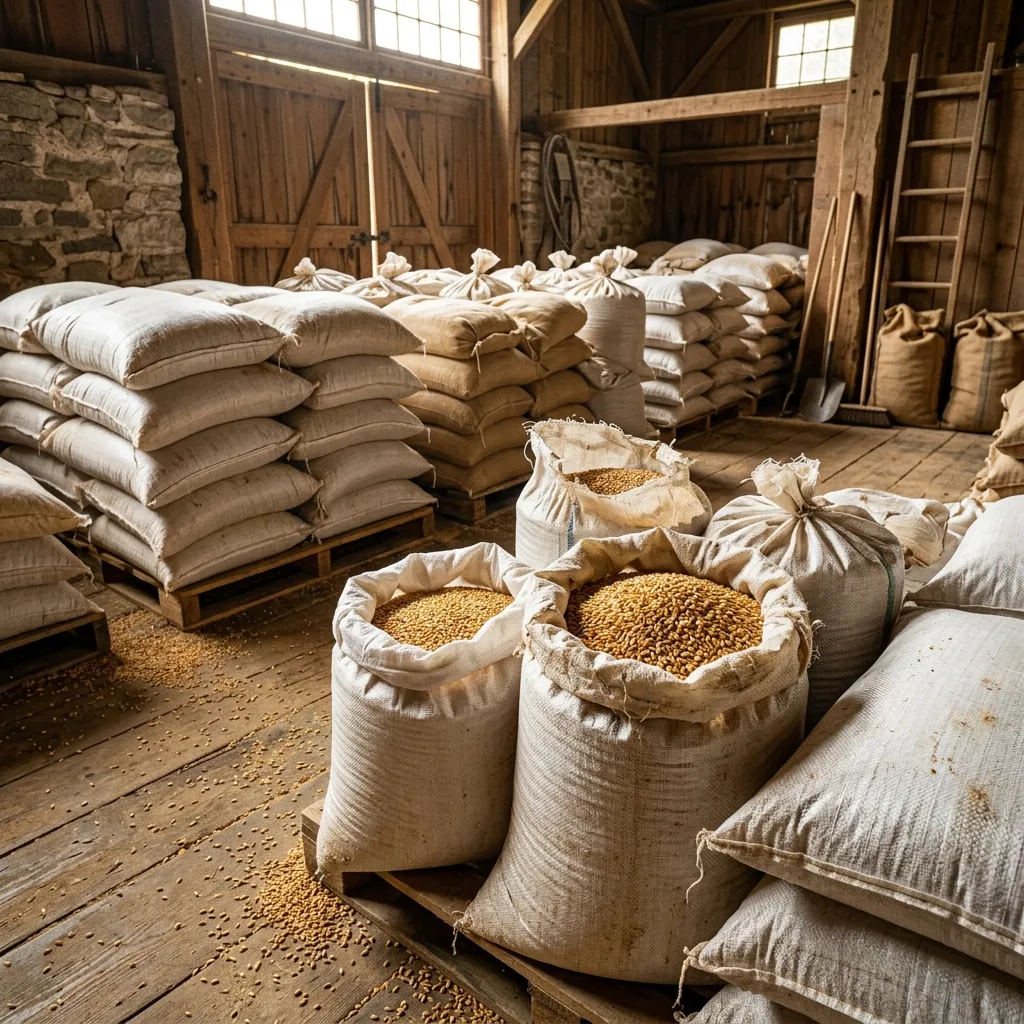
The largest single market for PP woven bags is agricultural packaging. Globally, billions of PP sacks are consumed annually for packaging wheat, rice, corn, barley, lentils, beans, pulses, animal feed, seeds, and flour. The bags offer excellent ventilation (in non-laminated versions), preventing moisture build-up that causes mold and spoilage.
PP woven bags are the industry standard for bulk storage and transport of wheat, rice, and other food grains.
✓Wheat & Flour: Typically 50kg bags, 65-75 GSM, with PE liner for moisture barrier. Iraq imports over 500 million wheat bags annually.
✓Rice: Premium BOPP laminated bags for retail (5kg, 10kg) and standard bags for wholesale (25kg, 50kg). High-quality printing is essential for brand differentiation.
✓Animal Feed: Heavy-duty bags (75-90 GSM) with anti-slip coating for stable palletization. Often require UV stabilization for farm storage.
✓Seeds & Pulses: Smaller bags (10-25kg) with tight mesh count to prevent sifting of small granules through the weave.
⚗️ Chemicals & Fertilizers
Chemical and fertilizer companies rely on PP bags for safe and cost-effective bulk transport. The chemical inertness of polypropylene makes it compatible with a wide range of agricultural chemicals, industrial reagents, and fertilizer compounds including urea, DAP, NPK, ammonium nitrate, and potash.
✓Urea & DAP Fertilizer: 50kg PE-lined bags with UV protection for extended outdoor storage at agricultural depots.
✓Polymer Resins: Heavy-duty bags for transporting PP, PE, PVC granules between petrochemical plants and downstream processors.
✓Calcium Carbonate & Fillers: High-GSM bags with gusseted design to handle dense mineral powders weighing 25-50kg per bag.
🏗️ Construction & Building Materials
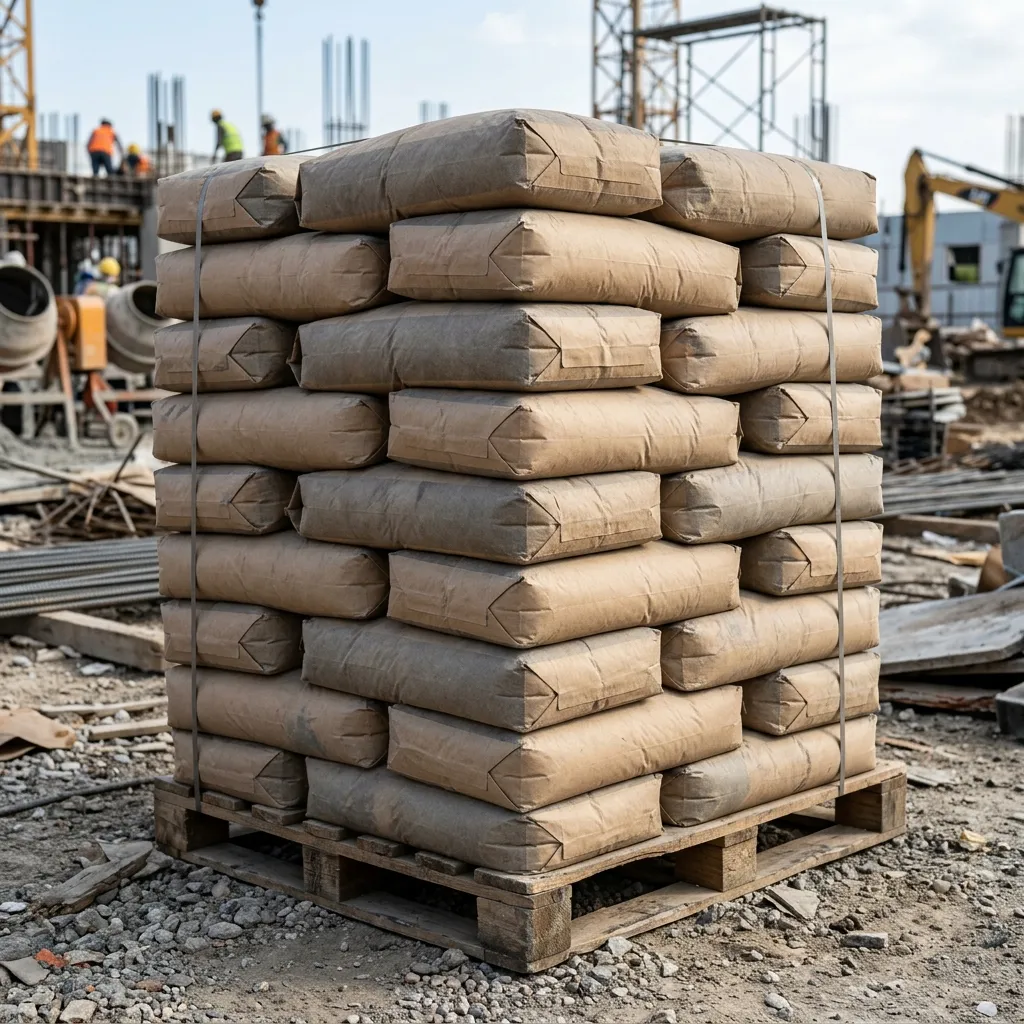
The construction sector demands the toughest PP bags available. Cement bags must withstand the abrasive nature of their contents, the mechanical stress of automated filling lines, and the compression forces of multi-layer pallet stacking during transport and storage. Iraq's massive reconstruction efforts have made it one of the world's largest importers of PP cement bags.
Heavy-duty valve bags on pallets, engineered for the extreme demands of the construction industry.
✓Cement: 50kg valve bags, 90-120 GSM, PE-coated interior, block-bottom design. Must pass burst test at 35+ kPa.
✓Sand & Gravel: Extra heavy-duty bags with reinforced bottom seams and higher denier tapes (1000D+).
✓Gypsum & Plaster: Moisture-sensitive materials requiring PE-laminated bags with excellent seal integrity.
🍚 Food Industry & Retail
Food-grade PP bags must comply with stringent international food safety standards. These bags are manufactured in dedicated clean-room environments and use only FDA/EU-approved PP resins and inks. The food industry increasingly favors BOPP laminated bags for their superior branding capabilities and product protection.
✓Sugar: PE-lined bags to prevent moisture absorption. White interior for food safety compliance.
✓Salt: Laminated bags with hermetic sealing to prevent clumping from humidity exposure.
✓Pet Food: BOPP bags with high-resolution printing, resealable zipper tops, and carry handles.
📦 Other Applications
Flood Protection
UV-stabilized sandbags for military and civil defense flood barriers. High elongation tapes prevent rupture under water pressure.
Geotextiles
PP woven geotextile fabric for soil stabilization, erosion control, and drainage systems in civil engineering projects.
Mining & Minerals
Heavy-duty FIBC bags for transporting iron ore, coal, manganese, and other mineral resources from mines to processing plants.
Waste Management
Reusable debris bags for construction waste, garden refuse, and recycling collection in municipal programs.
Why Iranian PP Bags Are Dominating the Middle East and CIS Markets
Iran has emerged as one of the world's most competitive PP bag manufacturing hubs, with over 200 factories producing billions of bags annually. The country's dominance in regional markets — particularly Iraq, Afghanistan, Russia, Kazakhstan, Azerbaijan, Turkey, Turkmenistan, and Armenia — is not accidental. It is the result of a powerful combination of structural advantages that are difficult for competitors to replicate.
1
Petrochemical Abundance
Iran is a top global PP producer. Major petrochemical complexes provide raw materials at highly competitive prices, giving manufacturers a 15-25% cost advantage over global competitors.
2
Competitive Pricing
Low energy and labor costs translate to prices 20-35% below Chinese equivalents. Most Iranian factories accept MOQs as low as 50,000 pieces with full customization.
3
Full Customization
From 30×50cm to 100×150cm, GSM from 45 to 120, PE coating, BOPP lamination, and printing up to 8 colors. Buyers get tailor-made solutions for any industrial need.
Export Quality Standards & Certifications
To succeed in international markets, the bags we supply adhere to rigorous quality controls at every stage of production. We understand that our clients' reputation depends on the reliability of their packaging, and we treat every order with the same exacting standards regardless of the order volume.
🏅
ISO 9001:2015
Quality Management System certification ensuring consistent production processes, documented procedures, and continuous improvement. Every batch is traceable from raw material receipt to finished product shipment.
🛡️
ISO 22000
For food-grade bags (rice, sugar, flour, salt), ISO 22000 certification guarantees HACCP principles are applied throughout manufacturing. This includes controlled raw material sourcing and hygienic production.
🌿
ISO 14001
Environmental management certification demonstrating commitment to sustainable manufacturing. PP bags are 100% recyclable, and modern factories implement waste reduction programs.
📋
Certificate of Origin
Essential for customs clearance in Iraq, Russia, and CIS countries. We provide authenticated certificates from the Iran Chamber of Commerce, certified by the destination country's embassy.
Quality Testing Methods
Every batch we supply undergoes the following standardized tests to ensure compliance with client specifications and international norms:
Test
Standard
Purpose
Acceptance Criteria
Tensile Strength Test
IS 14968 / ASTM D5034
Measures breaking force of fabric strip
≥50N/5cm (standard), ≥80N/5cm (HD)
Drop Test
IS 7028-2
Simulates handling damage
No failure after 10 drops × 1.2m
Burst Strength Test
IS 1060-1
Tests pressure resistance
≥35 kPa for cement bags
UV Resistance Test
ASTM G154
Measures strength retention after UV exposure
≥50% retention after rated hours
GSM Verification
ISO 3801
Confirms fabric weight per sq meter
±3% of specified GSM
Moisture Barrier (MVTR)
ASTM E96
Water vapor transmission rate
<5 g/m²/day for PE-coated bags
💡 Pro Tip for International Buyers
Always request a "Burst Test" report if you are planning to stack bags more than 5 layers high in warehouses or during container shipping. This ensures the bottom bags won't fail under static compressive pressure over time. Additionally, ask for a "Creep Test" report for bags that will be stored for extended periods (3+ months) — this measures how the bag deforms under constant load.
For food-grade applications, always verify that the manufacturer can provide migration testing certificates proving that no harmful chemicals leach from the packaging into the food product. This is a legal requirement in the EU and increasingly enforced in Gulf and CIS countries.
Country-Specific Import Requirements
🇮🇶 Iraq
Requires Certificate of Origin from Iran Chamber of Commerce, Certificate of Conformity (CoC) from accredited testing labs, and Arabic-language product labeling. Goods entering through Basra port require additional COSQC inspection. Bags for government grain tenders (Ministry of Trade) must meet Iraqi Standard Specifications (IQS).
🇷🇺 Russia & EAEU
PP bags entering the Eurasian Economic Union (Russia, Kazakhstan, Belarus, Armenia, Kyrgyzstan) must comply with GOST R standards and carry the EAC mark. Food-contact bags require a Declaration of Conformity under Technical Regulation TR CU 005/2011. All documentation must be in Russian.
🇦🇿 Azerbaijan
Requires Certificate of Origin, commercial invoice, packing list, and quality certificates. Food-grade bags require conformity to Azerbaijan National Standards (AZS). Customs processing through Astara border is the fastest route from Iran.
🇹🇲 Turkmenistan
Imports are managed through state agencies. All packaging materials must meet TDS (Turkmen State Standards). Sarakhs border crossing provides direct rail and truck access from Iran. Documentation in Russian or Turkmen is preferred.
Sustainability & Environmental Considerations
Polypropylene is classified as Resin Identification Code #5 and is one of the easiest plastics to recycle. Modern recycling facilities can process post-consumer PP woven bags into high-quality recycled pellets that retain 85-90% of the virgin material's mechanical properties.
700 dark:text-gray-300">
Additionally, PP bags have a significantly lower carbon footprint per unit of cargo protected compared to paper sacks (which require deforestation) and jute bags (which require extensive agricultural inputs). Life Cycle Analysis (LCA) studies consistently show that PP woven bags offer the best balance of performance, cost, and environmental impact for bulk packaging applications.
SherkatTrade Ordering Guide: Step-by-Step
1
Submit Specifications
Send us your bag dimensions, GSM, and printing artwork.
2
Receive Quote & Sample
Get a detailed FOB/CIF quote and physical samples within 48 hours.
3
100% Advance Payment
Mandatory for all export orders due to custom lamination and printing requirements.
4
Production & QC
Manufacturing takes 15-25 days. Quality reports are provided during production.
Global shipping via sea/land with full export documentation provided.
Frequently Asked Questions (FAQ)
Difference between woven and non-woven?
▼
Woven bags are interlaced flat tapes for high industrial strength. Non-woven are pressed fibers for softer shopping bags.
Maximum weight capacity?
▼
Standard bags: 10-50kg. FIBC Jumbo: 500-2000kg. Capacity depends on GSM and seam strength.
Are they food-safe?
▼
Yes, when using food-grade virgin PP and compliant inks. We provide migration test certificates.
Outdoor durability?
▼
With UV additives, 3-6 months. Without, degradation occurs in 4 weeks of sun exposure.
Custom printing lead time?
▼
15-20 working days for flexo. 20-30 days for BOPP. Standard bags: 10-15 days.
Conclusion: Making the Right Choice
Choosing the right PP woven bag is not just about the price — it's about protecting your valuable cargo, building your brand reputation, and ensuring compliance with international trade regulations. Every parameter matters: GSM determines durability, denier defines thread strength, UV treatment ensures outdoor survivability, and proper certifications guarantee market access.
Whether you need BOPP laminated bags for premium rice branding, heavy-duty valve sacks for cement packaging, standard bags for grain storage, or FIBC containers for mineral exports, understanding these specifications will help you make an informed decision and build a successful, long-term export partnership.
Ready to Order SherkatTrade Premium PP Woven Bags?
Partner with us for specialized, high-volume, and cost-effective packaging solutions. From Iraq to Russia, we deliver excellence.
📧 Contact our export team today for a free consultation and competitive quote.